


Lexi Lopez works a full-time job while being a mother to her 4-year-old child and primary caregiver to her husband, Justin. Justin balances a career and parenting while living with limb-girdle muscular dystrophy (LGMD). He uses a power wheelchair and needs assistance with some activities of daily living.
Lexi and Justin are well aware of the “disability tax” — the high cost of durable medical equipment, accessible transportation, home modifications, and the time commitment that caregiving requires. The Toledo, Ohio, couple are saving for a wheelchair-accessible van that could cost upwards of $80,000.

Lexi Lopez
The Lopezes are fortunate that their parents live close enough to serve as backup caregivers. Lexi’s job as an Eligibility Specialist with the Ohio Department of Job and Family Services offers a hybrid work environment and good benefits. Even so, Lexi feels the strain.
“I understand the frustration, the guilt of being an employee and a caregiver,” she says.
For family caregivers, the financial burden often extends beyond the medical bills and high cost of essential needs. There are also less visible costs of caregiving, including time away from work, lost income, and reduced opportunities for career advancement. Understanding these costs — and finding ways to manage them — can help caregivers protect their well-being while providing the support their loved ones need.
Financial strain is common
Several recent studies have detailed how caregiving can lead to financial strain.
Muscular Dystrophy Canada and the Canadian Institutes of Health Research supported the BIND study on the financial burden of neuromuscular diseases, published in 2025. Researchers surveyed more than 1,000 people living with neuromuscular disorders and their caregivers and found “widespread financial pressures.”
Among the key findings:
- Three-quarters of participants reported incomes below the national median, largely due to reduced employment.
- Caregivers consistently reported significant financial burden.
- 27.5% had annual out-of-pocket caregiving expenses over $4,000.
About two-thirds of family caregivers are women. A study by the Family Caregiver Alliance reported on the ways that being a family caregiver can impact a woman’s career:
- 33% of working women who are caregivers decreased work hours
- 29% passed up a job promotion, training, or assignment
- 22% took a leave of absence
- 16% quit their jobs
The total uncompensated economic value of all adult caregiving by family members in the United States is estimated at $1 trillion annually.
In addition, the 2026 AARP Caregiving Out-of-Pocket Costs Study found that caregivers spend an average of $11,508 a year on caregiving. This includes expenses related to medical care, housing, and household supplies.
Balancing life and caregiving
The AARP also found that 1 in 5 caregivers report poor health. The physical and emotional demands of caregiving can carry a financial cost, as injury or chronic stress may force caregivers to reduce their work hours, take unpaid leave, or leave the workforce altogether. (Learn steps caregivers can take to care for their well-being in 7 Essential Tips for Family Caregivers to Avoid Common Injuries.)
Tressa French has a unique perspective on the emotional strain caregivers face. She is a single mom homeschooling two children with disabilities while operating a mental health counseling and mindfulness meditation teaching practice. Her 16-year-old son, Xander, lives with Duchenne muscular dystrophy (DMD) and uses a power wheelchair.
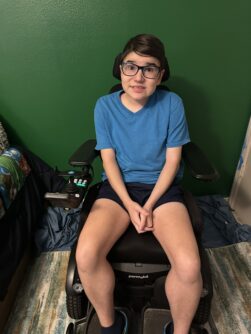
Xander
“To deal with stress, I always advise caregivers to do something they love every single day. If it’s a 20-minute walk, a podcast, working on a puzzle — prioritize the time for it,” she says.
Lexi puts this advice into action. She is active in her church and carves out time to do things she enjoys, like reading and game nights with friends.
Tressa recommends mindfulness meditation to help cope with emotions — like grief and anger — that are common for caregivers. Even when a caregiver feels like they have everything under control, talking with a therapist may be beneficial. This can help you build self-awareness and emotional resilience before life becomes overwhelming.
Advocating for caregivers
The MDA Advocacy team advocates to Congress and federal agencies for policies to better support family caregivers in the neuromuscular disease community. Earlier this year, MDA launched its campaign to support family caregivers, providing resources and advocacy opportunities on a new landing page: mda.org/SupportCaregivers.
Through this campaign, MDA invites advocates to join us in urging Congress to reject any additional cuts to programs that support caregivers and instead focus on bipartisan solutions to common caregiving challenges, including:
- Alleviating Barriers for Caregivers Act (S. 1227 / H.R. 2491): Requires CMS and SSA — with input from family caregivers, including caregivers with disabilities, and individuals entitled to or filing for benefits — to review and simplify processes for tasks such as establishing eligibility, enrolling in/maintaining eligibility, and utilizing the full benefits available in Medicaid, Medicare, CHIP, SSI, and SSDI.
- Credit for Caring Act (S. 925 / H.R. 2036): Creates a non-refundable tax credit of up to $5,000 to offset some costs of caregiving.
- Lowering Costs for Caregivers Act (S. 1565/H.R. 138): Allows HSA and FSA flexibility for medical expenses related to caring for a parent or parent-in-law, in addition to spouses and dependents.
In addition, MDA is leveraging new opportunities to amplify the voices of family caregivers in the neuromuscular disease community, including nominating MDA advocates for appointments to key federal advisory committees. Also, in October, MDA joined other leading organizations in a new advocacy coalition, the Families and Caregivers Economic Security Coalition, focused on advancing federal policies that address caregivers’ financial challenges.
Finding financial support

Shannon Orehek
Shannon Orehek, a Social Worker Case Manager at Penn State Medical Group Neuroscience Institute, is very familiar with “the center gap” — the vast number of caregiving families that are not wealthy enough to hire personal care attendants (PCAs) without worrying about the cost, but not financially eligible to qualify for Medicaid Waivers or other benefits.
“A lot of people provide the care themselves with no financial support. Professional caregivers cost $35 to $45 per hour,” she says. “For a lot of people dealing with burnout and without the means to pay PCAs, we suggest reaching out to their community, their church family, or to any nonprofit that may provide some help.”
Shannon advises caregivers to pursue three sources:
- Their county or state department on aging,
- Medicaid waivers
- Benefits from the US Department of Veterans Affairs
If the person receiving care is a veteran and requires personal care, family caregivers can earn approximately $1,896 per month. If the veteran is unable to self-sustain in the community (considered the highest level of care need), the monthly caregiver stipend is $3,034 per month. Both stipends are tax free and may be adjusted for cost of living.
Medicaid provides health coverage to individuals who have limited income and resources. A Medicaid Home and Community Based Services waiver helps people stay in their homes instead of receiving care in a nursing home or other institution. If granted, the waiver from typically rigid Medicaid rules can provide funding for in-home personal care attendants and services. Waiver requests go through your state.
If a person needing care bought long-term care insurance, it may have a benefit for caregiving if the person is no longer able to work.
Think local: State programs + community services
Tressa, who lives in Kissimmee, Florida, has faced the center gap, earning too much to qualify for most benefits that could help pay for Xander’s therapies and mobility equipment.

Tressa French
She advises parents to explore every government and nonprofit program, since some aren’t based solely on income. For example, Florida’s Children’s Medical Services covers the healthcare costs of children under 21 with chronic conditions. Through this service, Tressa pays a nominal amount per month for a program that fully covered Xander’s gene therapy.
She also found a local charity that helped her pay for bathroom modifications in their home. “They replaced a tub with a roll-in shower, and they widened the bathroom door to make it wheelchair accessible. They don’t have a huge budget, but they were able to help,” she says.
Family caregivers like Tressa and Lexi are the backbone of the neuromuscular community, providing untold hours of care while balancing other responsibilities. Thinking creatively about where and how to find support can ease some of the financial pressure that comes with being a caregiver. But ultimately, the solution lies in advocating for programs that support family caregivers and give them hope for a better future.
The post The Hidden Costs of Caregiving: What They Are and How Family Caregivers Can Manage Them appeared first on Quest | Muscular Dystrophy Association.