


Duchenne muscular dystrophy research update
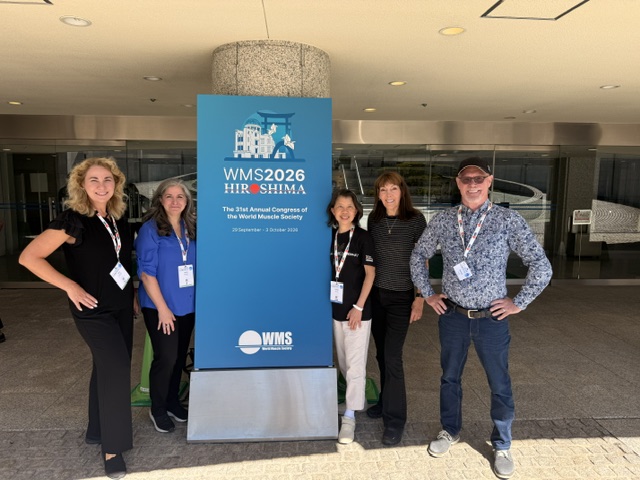
Members of the CureDuchenne team recently attended the 31st World Muscle Society (WMS) Congress, where we spent a productive week connecting with researchers, clinicians, pharmaceutical companies, and patient advocacy organizations from around the world. Meetings and presentations throughout the conference provided valuable insights into the latest scientific advances and emerging treatments for Duchenne and Becker muscular dystrophy.
From gene therapy and exon-skipping approaches to muscle regeneration and long-term disease management, the conference highlighted the continued momentum across multiple areas of research. Below are some of the key updates that may be of interest to the Duchenne and Becker community.
Industry and Clinical Development Updates
Sarepta Therapeutics presented new two-year data on ELEVIDYS®, showing sustained micro-dystrophin expression and continued functional benefits across multiple age groups. These findings support the long-term potential of gene therapy as a treatment option for individuals with Duchenne muscular dystrophy.
Satellos Bioscience shared Phase 2 data on forazapadin (SAT-3247), a treatment designed to promote muscle regeneration through a dystrophin-independent mechanism. This approach aims to improve the body’s natural ability to repair damaged muscle tissue, potentially benefiting a broad range of individuals with Duchenne regardless of their specific mutation.
Secretome Therapeutics highlighted its regenerative medicine platform, which targets inflammation, fibrosis, and muscle repair. The company also announced the initiation of an open-label Phase 2 study evaluating both skeletal muscle and cardiac outcomes.
NS Pharma / Nippon Shinyaku Researchers presented five-year clinical data for brogidirsen (NS-089/NCNP-02), an exon 44-skipping therapy currently in development. Long-term treatment demonstrated maintenance of motor and upper-limb function compared with expected disease progression and showed no serious treatment-related safety concerns. A global Phase II study is ongoing.
REGENXBIO shared additional data from its RGX-202 gene therapy program. Results continue to demonstrate encouraging safety findings, strong micro-dystrophin expression, and positive functional outcomes in treated participants.
Capricor Therapeutics presented results from the HOPE-3 extension study of deramiocel, which showed continued slowing of upper-limb functional decline as well as potential musculoskeletal and cardiac benefits. These findings reinforce the growing focus on therapies that address multiple aspects of Duchenne progression.
In addition to scientific presentations, several companies hosted educational symposia focused on advancements in Duchenne and Becker muscular dystrophy research.
NS Pharma highlighted ongoing innovation in exon-skipping therapies and discussed the importance of long-term outcomes in mutation-specific Duchenne treatments.
Entrada provided updates on its EEV exon-skipping platform, including programs targeting Exons 44, 45, and 50.
SERVIER
Servier presented research examining the burden of Becker muscular dystrophy, with a focus on patient experiences, disease progression, and clinical implications for care and future research.
ITF Therapeutics / Italfarmaco
The symposium focused on emerging treatment targets for Duchenne muscular dystrophy and the importance of measuring long-term disease outcomes.
Looking Ahead
The Duchenne and Becker research landscape continues to evolve rapidly, with multiple therapeutic approaches advancing simultaneously. While important challenges remain, the presentations and discussions at WMS 2026 highlighted the significant progress being made across the field.
CureDuchenne remains committed to staying engaged with researchers, industry partners, and the global patient community as we work together to accelerate treatments and improve outcomes for everyone affected by Duchenne and Becker muscular dystrophy.
The post 31st World Muscle Society Congress: Duchenne and Becker Muscular Dystrophy Highlights appeared first on CureDuchenne.