


Living with a rare disease means navigating a healthcare system that often feels fragmented and overwhelming. For many of us, finding a doctor who truly understands our condition is essential.
A rare disease specialist does more than treat symptoms. They see the complete picture of who you are and what you face. They understand the medical, emotional, and practical challenges that come with a lifelong condition. Most importantly, they listen, advocate, and guide you through the complexities of care with both expertise and compassion. Finding this kind of doctor is challenging but worth the effort.
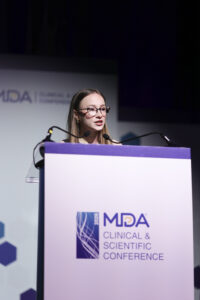
Lily Sander, MDA National Ambassador, presenting at the 2026 MDA Clinical and Scientific Conference
A crucial role in your care – and life
When you live with a rare disease, doctor’s appointments can feel uncertain. Will they recognize your history? Will they take your concerns seriously? Will they treat you as a person rather than a collection of symptoms?
For those with neuromuscular diseases, these concerns are even more critical. These conditions are complex and progressive, and too often misunderstood. A specialist in rare diseases brings more than medical knowledge: they bring deep understanding of what it means to live with a chronic condition that changes daily life.
They recognize how your condition affects every aspect of your existence. They ask about your goals, your struggles and your overall well-being, not just your test results. They might discuss how fatigue impacts your work or studies, acknowledge the emotional weight of living with a chronic illness, or help you plan for future needs like accessibility, career, or family life. This approach ensures your treatment plan supports your life, not just medical protocols.
A rare disease specialist also serves as the central coordinator for your care. Rare diseases often require multiple specialists: neurologists, physical therapists, orthopedists, and others. Without proper coordination, care can become inconsistent and confusing. The specialist ensures all your providers work together, communicating across fields and specialties to prevent conflicting advice. They help manage referrals, reduce appointment stress, and advocate for you when systems fall short. This coordination prevents burnout and medical errors.
Most importantly, these specialists stay current with the latest research, treatments, and clinical trials. Many doctors have limited experience with rare diseases, but specialists live with this reality every day. Their expertise means earlier intervention for complications, access to advanced therapies and accurate diagnoses.
How to find the team that fits your needs
Finding such a doctor isn’t easy. Many spend years seeing providers who dismiss their concerns or don’t understand their condition. Many struggle to find any provider familiar with their disease.
You deserve a doctor who takes all your symptoms seriously, even when they’re not immediately visible or straightforward. You deserve someone who listens without rushing and doesn’t make you feel like a burden. You deserve a provider who collaborates with you to create a care plan that fits your life and connects you with understanding resources and support.
If you’re searching for this kind of doctor, start with rare disease organizations. Groups like the Muscular Dystrophy Association maintain directories of vetted specialists who are more likely to provide the compassionate, informed care you need.
Don’t hesitate to ask for referrals from your current providers, local hospitals, or online patient communities. Other patients’ experiences can lead you to the right doctor.
Advocate for yourself actively. Before appointments, write down your symptoms, questions and goals. Bring your medication list, test results, and medical history. If a doctor isn’t listening, seek a second opinion; your health and quality of life are worth the effort.
Look for a care team, not just one doctor. The best care comes from multidisciplinary clinics with neurologists, physical therapists, social workers and others working together to support your whole well-being.
This March, as we recognize National Doctors’ Day, let’s honor the specialists who go beyond treating patients. They change lives, restore hope, and remind us we don’t have to face these conditions alone.
To patients: Keep searching, keep advocating, keep believing the right doctor exists.
To providers: Thank you for your empathy, expertise, and commitment to seeing the whole patient. Your work gives so many of us the confidence to live fully.
A rare disease can feel isolating, but it doesn’t have to define you. With the right doctor, a doctor who sees your complete story, not just your symptoms, you have the ability to be involved and informed in the care process, a reality that shapes the trajectories of our lives in a meaningful way.
You are more than your diagnosis. You are someone with dreams, goals and a future worth fighting for. And with the right doctor, that future becomes brighter every day.
The post Life with Lily: Why an Expert Specialist is Crucial for Your Care appeared first on Quest | Muscular Dystrophy Association.